
Does Midtown Have Ears?
Neil Leonard accidentally ignited something I had spent my entire life overlooking: the sonic identity of cities.

Neil Leonard is a composer, saxophonist, and interdisciplinary artist whose work lives at the intersection of music, technology, public space, and civic memory. A professor at Berklee College of Music, he has spent decades creating projects that invite people to experience cities not simply as places to move through, but as places to listen to. His latest residency at THE BLANC in Midtown Manhattan, Midtown Sound: Listening Legacy, explores the neighborhood's rich acoustic history through live performance, storytelling, and the evolving sounds that have shaped one of New York City's most storied cultural corridors.
I kept coming back to one thing after talking with Neil. It is that we spend an enormous amount of time preserving buildings in our society; while almost never preserving what those buildings sounded like. New York isn't just made of steel and glass. It's made of arguments, saxophone solos, taxi horns, conversations spilling out of diners at 2 a.m., rehearsal rooms, Broadway orchestras, radio stations, churches, construction sites, and millions of footsteps. Sound is history too.
When we first spoke about his residency at THE BLANC in Midtown Manhattan, I assumed we were going to talk about music. Instead, we ended up talking about listening. Then he told me about his grandfather.
In the 1930s, Neil’s grandfather, acoustician Paul J. Washburn, helped map the sounds of New York City during Mayor Fiorello La Guardia’s “War on Noise.” Long before anyone spoke about soundscapes or acoustic ecology, Washburn was studying how a city actually sounded—measuring street noise, documenting the changing acoustic environment, and asking how sound shapes daily life. His office happened to sit diagonally across the street from the building that is now THE BLANC.
Think about that for a second.
Nearly a century later, his grandson is creating a project in that same neighborhood called Midtown Sound: Listening Legacy—inviting musicians to respond to the sounds, histories, and cultural memory of Midtown.
You can call that coincidence. I call it a conversation across generations. That detail completely changed how I understood the project. This wasn’t simply a concert series. It was an act of listening to a place that had been speaking for generations. And once Neil pointed that out, I couldn’t shake it. Because every city has a voice….right? Some sing. Some whisper. Some argue with themselves. Some carry echoes long after the people who made them are gone. The question isn’t whether cities have identities. The question is whether they have ears—or perhaps whether we have ours open enough to hear them.
Specifically, sonic memory. What does a neighborhood remember after the people who made the sounds are gone?
That question has been following me around. We are remarkably good at preserving architecture. We’re less interested in preserving acoustics. We’ll landmark a building. We’ll archive photographs. We’ll save blueprints. But who is archiving the conversations? Who remembers what Forty-Second Street sounded like before smartphones? Who remembers jazz drifting out of basement clubs? Who remembers Broadway musicians carrying instrument cases down side streets? Who remembers the echo of typewriters, newspaper presses, early radio broadcasts, taxis, church bells, construction cranes, rehearsals, protests, laughter
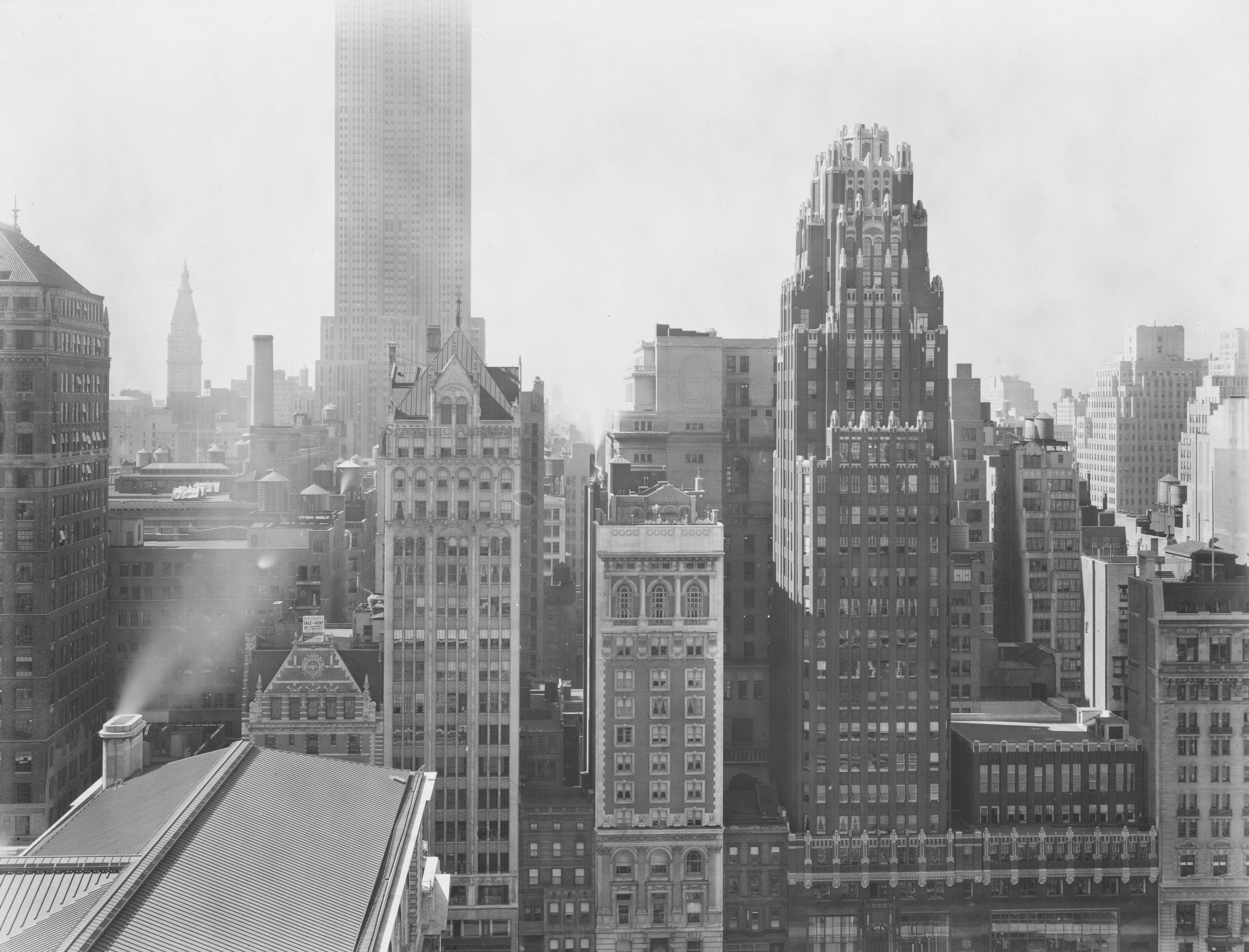
Cities disappear long before they’re demolished. Sometimes they disappear because they become quieter. Sometimes because they become louder. Sometimes because the sounds that once defined them simply stop. Neil’s project asks people to think about Midtown as a living acoustic ecosystem instead of a collection of famous addresses. I love that phrase. Acoustic ecosystem. Because ecosystems are relationships. Nothing exists alone. The subway changes the street. The street changes the café. The café changes the conversations. The conversations change the musicians. The musicians change the city. And the city changes the next generation of musicians. It made me think about Seattle. About the work I’m doing with Albert Smith’s archived photographs stored at MOHAI. One man documented the faces of Seattle’s jazz community. Neil is asking what happens when we document the sounds. Those are really the same project. One is visual memory. The other is sonic memory.
Both are asking the same question: How do we remember a place honestly?
History is often taught visually. Maps. Photographs. Architecture. Documents. But……. I think we underestimate how much sound teaches us about who we were. A neighborhood where children played outside sounds different from one where nobody knows their neighbors. A working waterfront sounds different from a luxury waterfront. A jazz club sounds different from a cocktail lounge trying to imitate one. You can hear culture before you can define it. Maybe that’s why music has always been such a powerful historical record. Not because it tells us facts. Because it tells us what it felt like to be there. Walking away from my conversation with Neil, I realized something unexpected. Every city has an archive we’ve been walking through our entire lives. We’ve just been listening with our eyes closed. And maybe the next generation of preservation won’t begin with another museum.
Maybe it begins by asking a remarkably simple question. What does this place sound like?
Before we forget.
The older I get, the less interested I become in collecting things. I'm interested in observing the evidence that people were here. A photograph. A record sleeve with someone's grocery list tucked inside. A living room where strangers once gathered around a piano. Or a city that still remembers the sound of itself. Those are the archives that keep pulling me in. The more stories I write, the more I realize I’m chasing the same question in different disguises. Albert J. Smith preserved the faces of a city. Daybreak Records preserves the fragments people accidentally leave behind. Neil Leonard is asking what happens when we preserve the sound of a place.
Different archives; but same impulse. Same heart beat. Same human connection. We all want evidence that we were here. Maybe that’s what cities are, after all—not collections of buildings, but collections of human traces, waiting for someone curious enough to notice them.
About the Author: Emily Steinhilber writes about the things that outlive us: photographs tucked into record sleeves, living rooms full of jazz, cities with memories, and the people who quietly preserve them. She is based in Seattle, where she is usually one question away from her next rabbit hole.
